No nation can secure its economic future while destroying the forests that sustain it.
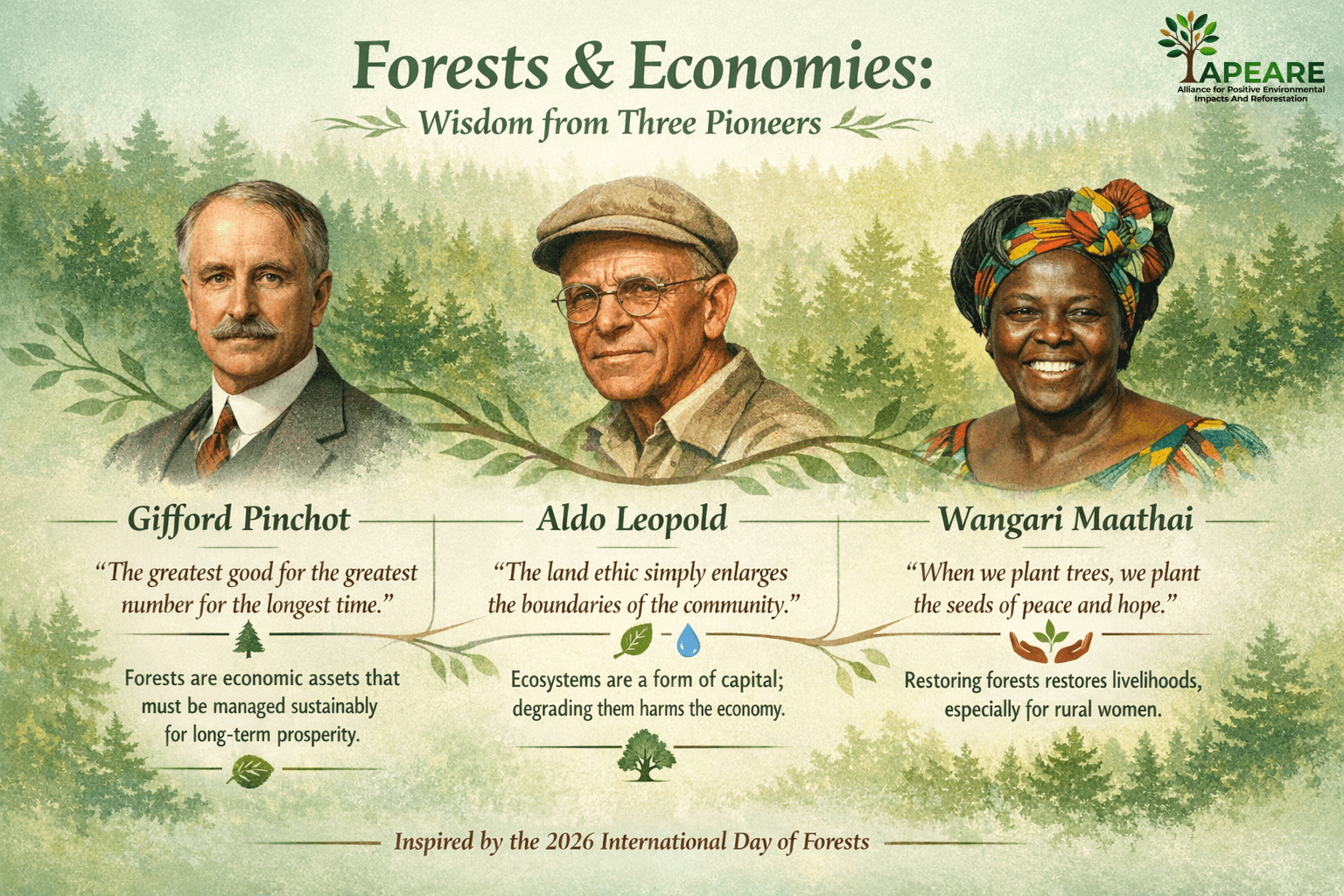
This truth has echoed across generations, carried by a handful of remarkable thinkers whose ideas continue to guide us through the challenges of their time and ours. As the world marks the 2026 International Day of Forests, three such voices stand out: Gifford Pinchot, Aldo Leopold, and Wangari Maathai.
They lived in different centuries, spoke to different audiences, and worked on different continents. Yet their insights converge into one powerful message: the health of a nation’s forests is inseparable from the health of its economy. This year’s theme, “Forests & Economies,” invites us to revisit their wisdom—not as distant history, but as a practical roadmap for the future we urgently need to build.
1. Gifford Pinchot: The Economist of the Forest
At the turn of the 20th century, Gifford Pinchot looked at America’s rapidly vanishing forests and saw more than trees; he saw the backbone of a national economy. His philosophy—“the greatest good for the greatest number for the longest time”—reframed forests as productive assets, not barriers to development.
Pinchot helped establish the U.S. Forest Service and millions of hectares of protected forests that continue to generate enormous economic value.
Recent data from the U.S. Forest Service shows just how central forests remain to the country’s economic strength. The forest products sector generates about $288 billion each year, representing roughly 4% of total U.S. manufacturing GDP. It also provides employment for nearly 950,000 people, with an annual payroll of around $50 billion, making it one of the top ten manufacturing employers in 45 states.
Beyond traditional products, Forest Service research continues to expand the economic potential of wood-based innovations. Engineered materials like glulam timber—which is stronger than steel while weighing only a fraction as much—are driving new markets. In 2023 alone, the glulam industry was valued at nearly $7.5 billion, with growth projected at 5% annually (USDA Forest Service, Accessed: March 21, 2026)
These numbers echo what Pinchot argued more than a century ago: forest protection is not anti‑development; it is the only form of development that endures.
2. Aldo Leopold: The Moral Economist of the Land
If Pinchot gave us the economic logic, Aldo Leopold offered the ethical foundation. In A Sand County Almanac, he wrote that a true land ethic “enlarges the boundaries of the community to include soils, waters, plants, and animals.”
Leopold understood something modern economists are only now quantifying: ecosystems are a form of capital, and degrading them is a costly form of self‑harm. His thinking laid the groundwork for:
- ecosystem service valuation,
- carbon markets,
- nature‑based solutions,
- regenerative agriculture.
Today’s research reinforces Leopold’s insight:
- Global ecosystem services, including forests are valued at $125–$150 trillion annually (Costanza et al., 1997; World Economic Forum, 2018).
- Every $1 invested in forest restoration returns $7–$30 in economic benefits (UNEP, 2023).
- Countries with strong forest cover experience greater climate resilience, reducing losses from floods, droughts, and soil erosion.
These findings echo Leopold’s timeless reminder: the economy is a wholly owned subsidiary of the environment, not the other way around.
3. Wangari Maathai: The African Voice of Regeneration
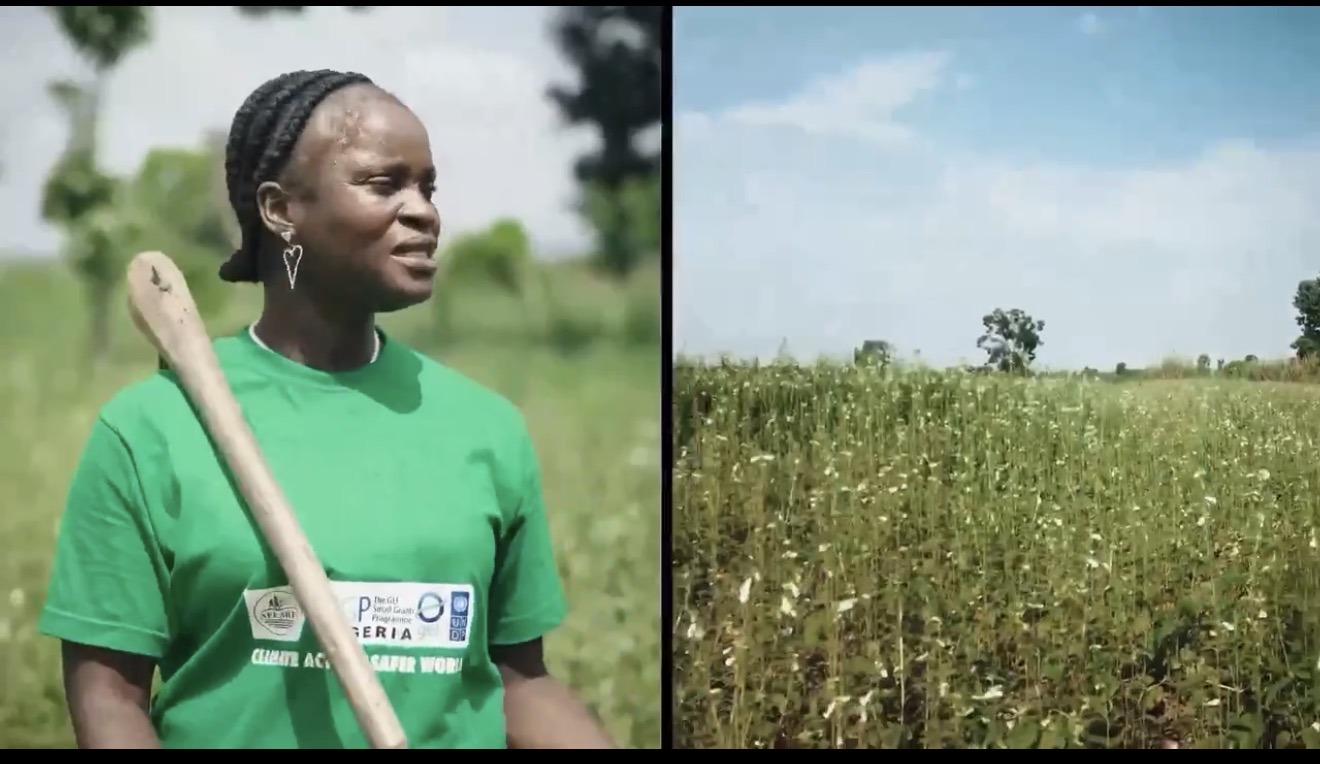
While Pinchot and Leopold shaped policy and philosophy, Wangari Maathai brought the forest–economy connection to life in the most human way possible. Through the Green Belt Movement, she mobilized millions of women to plant trees, not as symbols, but as sources of livelihood, dignity, and stability.
To the women she worked with, a tree meant:
- firewood for cooking,
- fruits for nutrition,
- shade for crops,
- water in the streams,
- and a restored sense of agency.
The impact speaks for itself (Green Belt Movement, 2024):
- Over 51 million trees planted across Kenya.
- Women reporting higher household income and improved food security.
- Kenya’s forest restoration efforts projected to create over 300,000 green jobs by 2030.
Maathai’s Nobel Peace Prize recognized a profound truth: ecological collapse and economic injustice are inseparable—and so are restoration and prosperity.
Three Voices, One Message
Pinchot showed how forests support economies.
Leopold explained why they must be protected.
Maathai revealed who benefits when we restore them.
Together, they form a powerful lineage of wisdom that speaks directly to this year’s theme: Forests & Economies. Their shared message is simple, urgent, and impossible to ignore: A nation that protects its forests invests in its own prosperity; A nation that destroys them mortgages its future.
Conclusion: A Call to Protect What Protects Us
According to the FAO (2020), sustainable forest management makes a significant contribution to national economic development. Forests are not just part of our landscape; they are part of our life‑support system. They regulate our climate, anchor our economies, and sustain our communities. Yet, as Taye et al. (2021) note, the economic value of ecosystem services is still largely invisible in national accounting systems, causing many countries to undervalue the natural capital that underpins their prosperity.
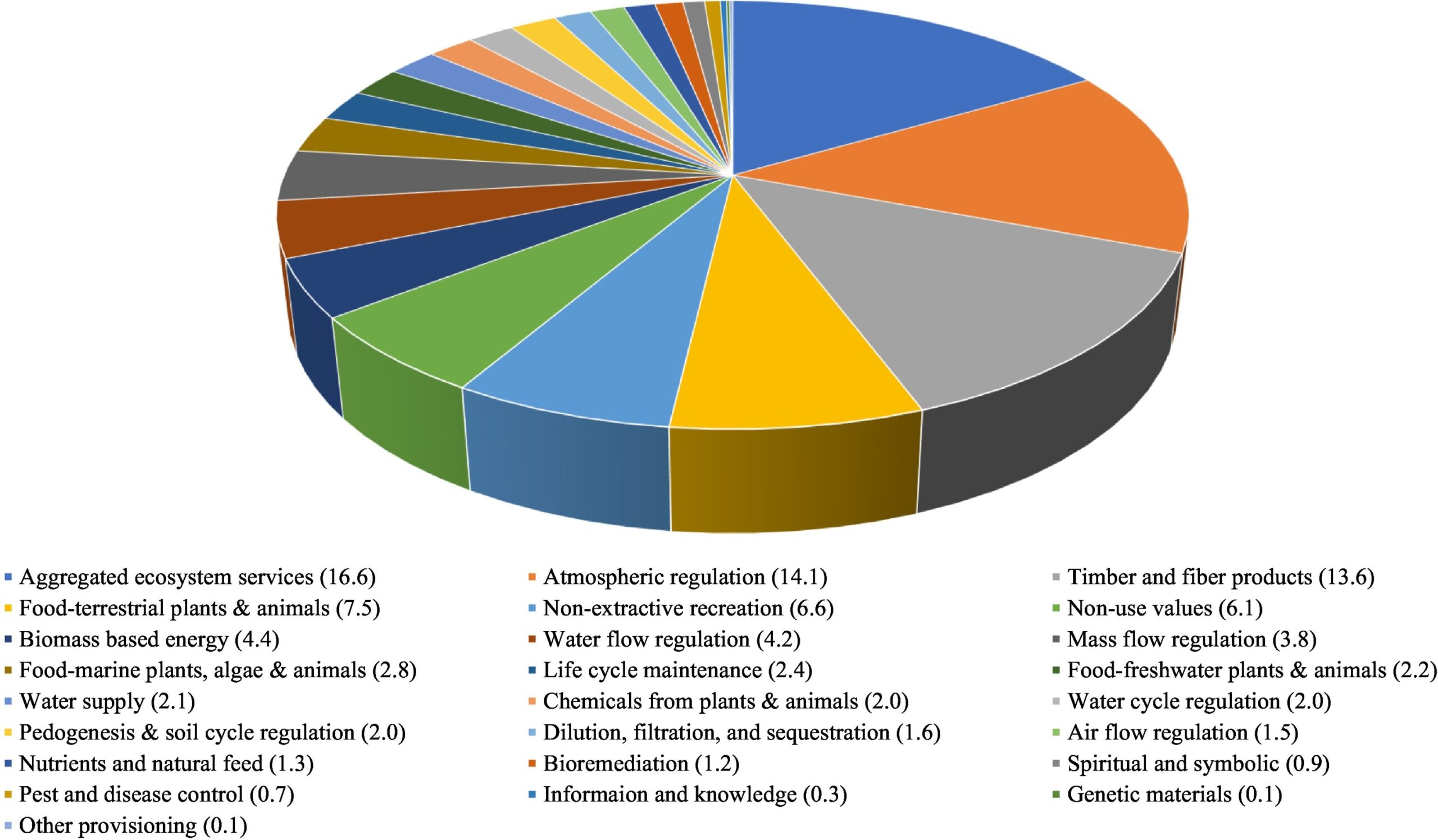
This year’s International Day of Forests theme, “Forests & Economies,” reminds us that forests are not passive environmental assets; they are active economic engines. From timber and bamboo to honey, medicinal plants, and ecotourism, forest value chains support millions of livelihoods, especially in rural communities. FAO emphasizes that these value chains are essential for job creation, poverty reduction, and building resilient local economies. When forests are healthy, they stabilize water systems, protect agricultural productivity, and reduce the economic risks associated with floods, droughts, and land degradation.
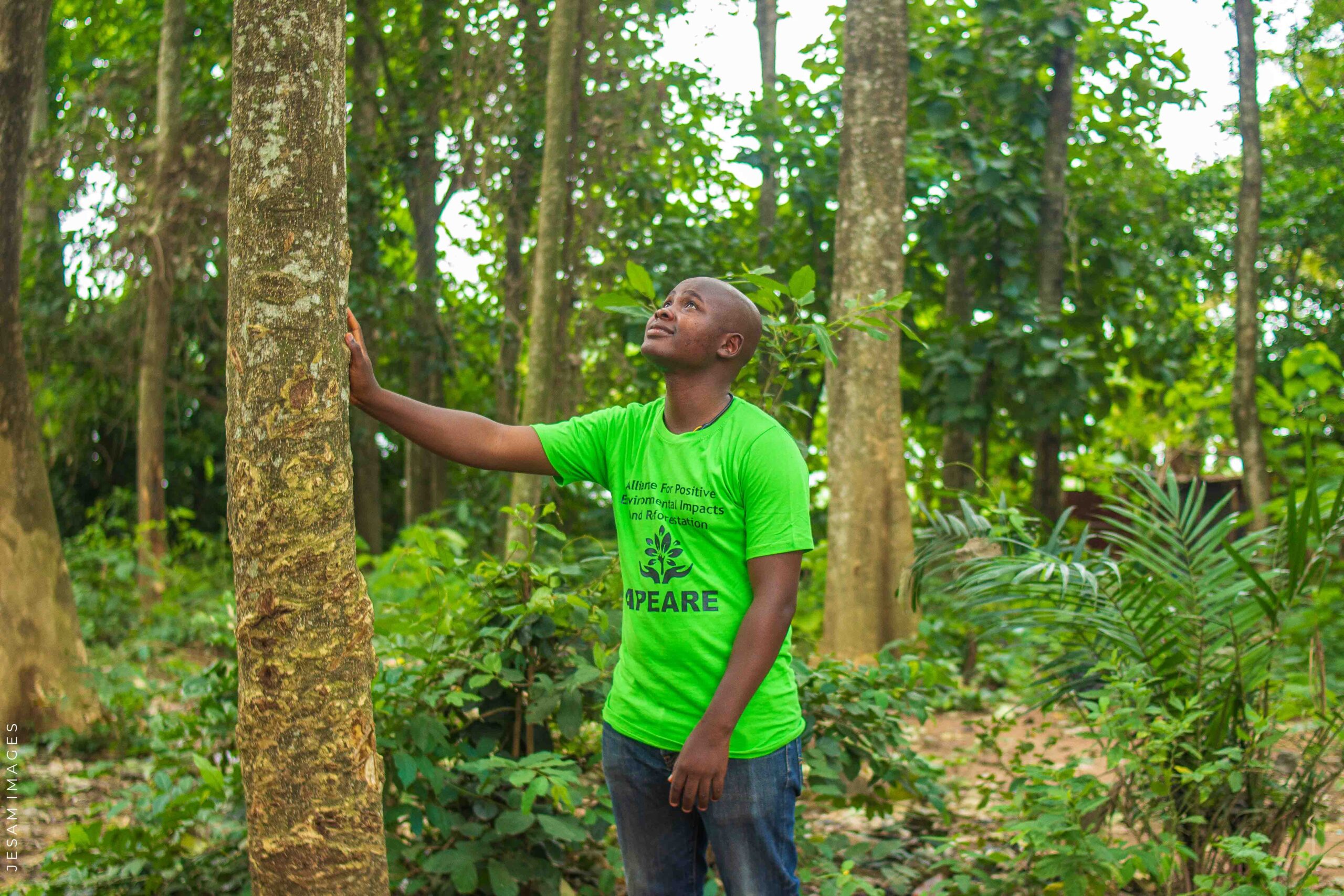
This is exactly where SDG 15 (Life on Land) becomes central. By restoring degraded lands, protecting biodiversity, and strengthening forest‑based livelihoods, APEARE is helping communities unlock the economic potential of forests in ways that align directly with this year’s theme. Through community‑led reforestation, regenerative agroforestry, and the revival of degraded ecosystems, APEARE demonstrates how forest restoration can fuel local economies, support sustainable value chains, and create long‑term opportunities for farmers and rural households.
As we mark the 2026 International Day of Forests, the message from Pinchot, Leopold, and Maathai rings louder than ever:
If we want a prosperous future, we must first protect the living systems that make prosperity possible.
Because in the end, the truth is simple: when forests thrive, people thrive. And when they fall, we fall with them.